Nobody hears and feels excited. You start thinking about the drilling, the temporary crown, the return visit and the time it takes to get everything finished.
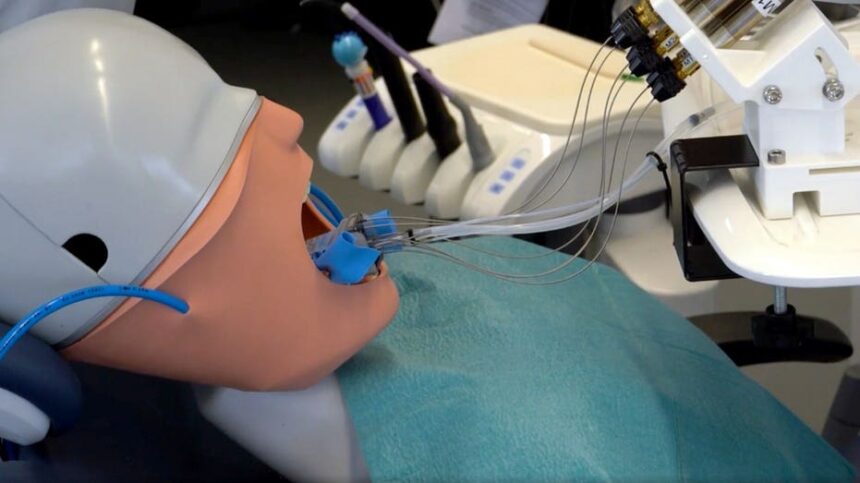
Now, researchers at the University of Basel in Switzerland are working on a tiny dental robot that could one day change that process. The prototype is called MIR, short for Miniature Intraoral Robot. University of Basel says the device could help prepare teeth for crowns and reduce the number of dental appointments needed for treatment.
WOULD YOU PAY $8,000 FOR A ROBOT TO FOLD LAUNDRY?
The idea may sound intense because we are talking about a drill-equipped robot inside your mouth. However, the current design keeps the larger motor and control parts outside the mouth. The small in-mouth robot connects to them through flexible drive shafts, cables and tubes.
Free live CyberGuy class: Sick of Spam? Join us July 22
Join us Wednesday, July 22, at 1 PM ET for a free CyberGuy Live class that will help you cut down on robocalls, spam texts, junk email and other unwanted messages. Kurt “CyberGuy” Knutsson will walk you step by step through simple ways to filter spam, clean up your inbox and recognize the messages that could put your personal information at risk. No technical experience is needed. Youll also receive our spam-stopping checklist, and every registrant will get a link to the class recording afterward.
Reserve your free spot today at CyberGuyLive.com.
If tooth decay leaves a large cavity, a dentist may need to prepare the tooth for a crown. Today, that can mean several steps. The dentist removes decay, fills the cavity, shapes the tooth, takes an impression and fits a temporary crown. Then, the permanent crown gets made and placed during a later visit.
That is where MIR could help. The goal is to move more of the process into a digital workflow. After a scan, a dentist could plan how much tooth material the robot should remove. Then, the crown could be ordered right away instead of waiting for another appointment.
MIR attaches to a custom-fitted dental splint made from the patient’s scan. That splint connects the robot to the teeth. So, if the patient turns their head, the robot moves with them.
That detail stood out to me. Anyone who has ever tried to stay perfectly still in a dental chair knows how hard that can be. Even a small twitch can feel huge when a drill is near your tooth.
The robot is designed to follow a digital treatment plan. In testing, it prepared tooth models in two stages. First, it used a wider drill to reduce the top of the tooth surface. Then, a longer, thinner drill worked along the sides.
HUMANOID ROBOTS PERFORM LIVE SURGERY IN WORLD FIRST
The University of Basel says the MIR prototype is about the size of a wine cork. It measures 43 by 26 by 28 millimeters. Dr. Yukiko Tomooka, the paper’s first author, said the robot was designed to fit comfortably inside an open mouth.
That small size is key. A dental robot cannot feel bulky or block the dentist’s view. It also cannot depend on a giant device sitting inside your mouth. So, the Basel team moved the larger parts outside the mouth and kept the in-mouth unit compact.
The project page from the University of Basel’s Department of Biomedical Engineering says the team wants MIR to enable a fully digital treatment workflow for tooth preparation. The long-term vision is a