
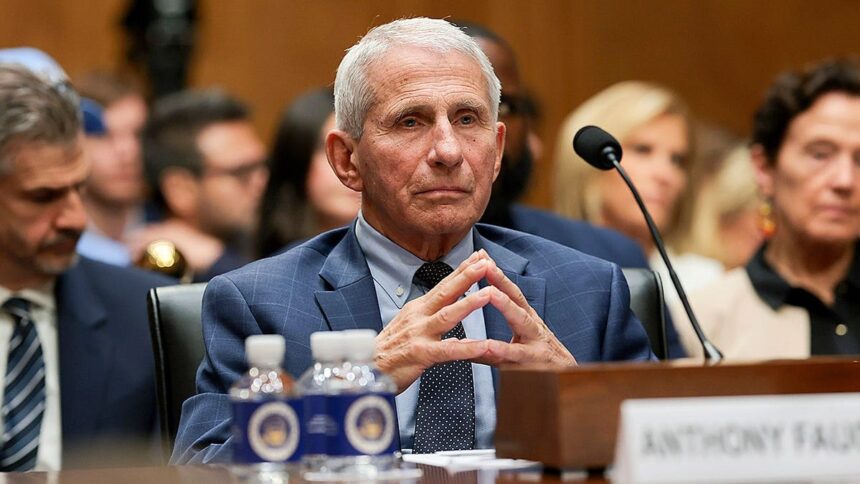
“Today I am the most famous and talked-about person in the country.” Those words from the diary of Dr. Anthony Fauci are certainly true as the U.S. Senate Committee on Homeland Security & Governmental Affairs moves forward with holding him in contempt for refusing to answer over a hundred questions about his past conduct and statements as the former head of the National Institute of Allergy and Infectious Diseases.
The contempt vote will start a process that is fraught with political and legal challenges. Even putting aside the objections to the direct referral from the Committee to the Justice Department (rather than submit the matter to a full Senate vote), there remain serious questions about whether Fauci can be held in contempt after invoking his right to remain silent under the Fifth Amendment. As I have previously stated, this area is rather murky and Fauci likely has the advantage in any litigation.
At the outset, it is important to note that Fauci always faced a risk of perjury in his prior appearances. Even if immunized, a witness can always be prosecuted for false statements. Fauci is in a much stronger position today than he was in prior hearings due to the sweeping pardon he received from former President Joe Biden. Yet, he suddenly decided to remain silent when his own words came back to contradict him.
FAUCI’S NEWLY RELEASED COVID DIARIES REVEAL BIZARRE FIXATION ON FAME AS PANDEMIC DEATHS MOUNTED
Now for the legal questions.
If a witness is immunized, they can be compelled to testify. If, for example, the Senate granted Fauci immunity, there would be little question about his answering these questions as well as the ability to charge him for any false statements.
The Senate Committee is arguing that the Biden pardon had the same impact. Since Fauci cannot be prosecuted for any acts during the extended period of the pardon (going back to 2014 when the government allegedly funded “gain-of-function research). Chairman Rand Paul did an excellent job in putting this issue into sharp relief in his final set of questions by framing his inquiry as confined to the period of his pardon.
The argument is credible and, for many, compelling: since Fauci cannot be prosecuted for any conduct during the pardon period, he has no legal exposure so long as he speaks truthfully.
For Fauci, that is a question that could be highly subjective. He referred to the risk of a “perjury trap” in his opening statement. He declared, “The only conclusion I can reach is that the sole reason he is calling me before this committee is to get me to say something â anything â that could vindicate his repeated public pledges that I end up, in his words, quote, behind bars.”
Even that statement could present a matter for litigation. Congress previously found in 2013 when high-ranking IRS leader Lois Lerner also pleaded the Fifth after giving an opening statement before the House Oversight and Government Reform Committee. The <a href="https://foxnews.com/category/politics/just