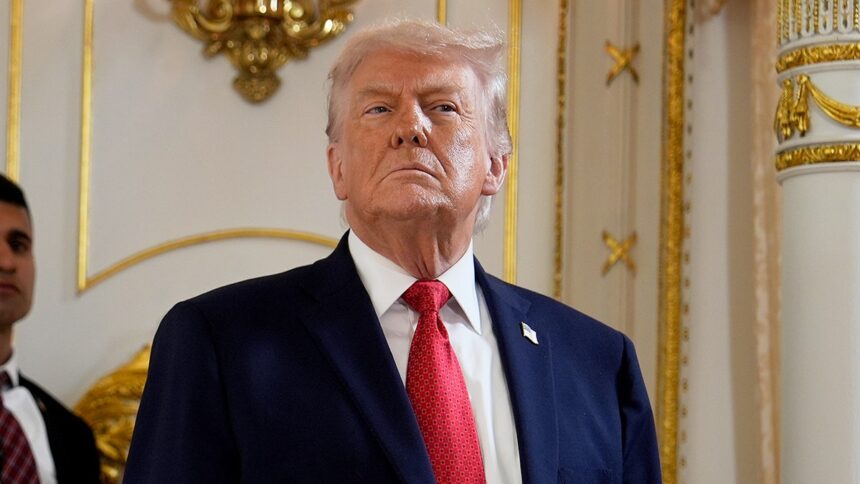
is determined to fight back against foreign governments that have been “screwing” American workers, companies, and investors for decades, as the president colorfully put it during his recent speech to global elites at the World Economic Forum.
So far, pundits have fixated on the administration’s most visible counteroffensive â its tariffs imposed over the last year. The president and his top advisors have consistently cast those tariffs as a tool to reshore supply chains and create more domestic sales and job opportunities for American companies and workers.
But behind the scenes, the administration is also quietly pressuring foreign countries to stop ignoring and weakening American firms’ intellectual property protections and depriving them of overseas sales opportunities.
America’s economy increasingly depends on companies pouring enormous amounts of time and capital into the risky research that’s required to bring new technologies to market. incentivize and protect those investments â and all Americans benefit from the ensuing economic growth and technological progress. IP-intensive industries support nearly half of U.S. GDP and more than 62 million jobs.
And that’s why, in the long run, the administration’s lower-profile efforts to strengthen IP protections may actually prove even more beneficial for American companies, workers and consumers than its much-touted tariff policy.
Foreign governments’ abusive trade practices are especially damaging in the pharmaceutical industry. American firms dominate global drug development, yet foreign governments undervalue those treatments through direct price controls, mandatory rebates, deliberate regulatory delays, and other tactics designed to artificially suppress spending on medicines invented and made in America. This freeriding on American innovation shifts the cost burden for that innovation disproportionately onto American patients.
The European Union, for instance, recently adopted extensive changes under its “General Pharmaceutical Legislation,” which cuts the market exclusivity period for new drugs and forces companies to navigate burdensome regulatory hurdles to regain that exclusivity. On top of that, the EU is considering new rules that would make it easier for governments to compel companies to hand over their patented technologies.
Mexico, meanwhile, has failed to uphold key IP commitments it made during the inked during the first Trump administration. Our southern neighbor allows generic and biosimilar manufacturers to prematurely launch their products without a dependable system to verify existing patents. As a result, American biotech innovators often don’t receive the timely notice and opportunity they need to defend their patent rights before competitors launch products. The United States should therefore keep of the Special 301 report and continue applying pressure to ensure Mexico fulfills its USMCA obligations ahead of the agreement’s upcoming review.
The administration has already started pushing back on countries not upholding their end of the bargain in other ways. It recently cut a deal with the United Kingdom that, in exchange for exempting British-made drugs from tariffs, requires the UK to limit the amount of revenue that it claws back from biotech companies and ultimately double spending on medicines as a share of GDP. The administration’s trade negotiators are pressuring other countries for similar concessions.
Likewise, the administration has taken steps to block companies from â from drugs to computer chips â into the United States if they infringe American intellectual property.
Last summer, the  and the Patent and Trademark Office (PTO) filed a statement of interest in an ongoing lawsuit between Samsung and Radian Memory Systems, a startup that has accused the Korean tech giant of stealing its patented storage technology. The DOJ and PTO warned that patent infringement c