For some unknown reason, claiming victimhood is very popular in modern society. Many people seem to think being a victim earns them social capital, so they look for every opportunity to capitalize.
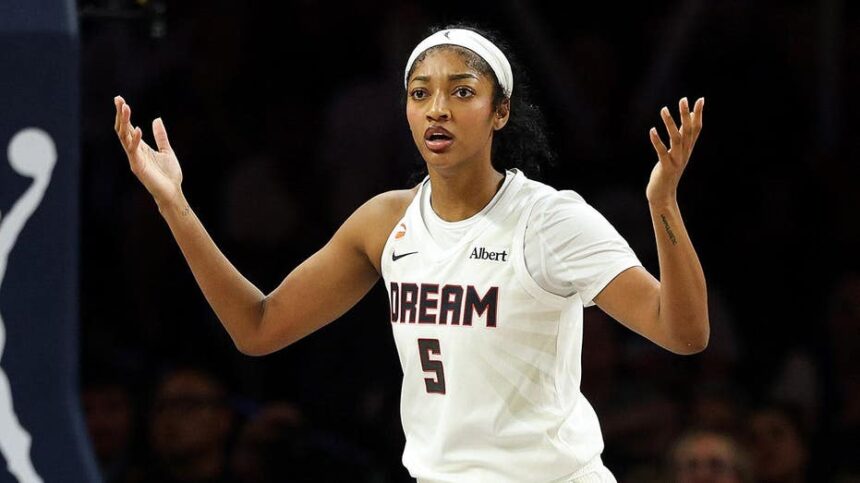
A perfect example is WNBA star Angel Reese.
Perhaps no prominent professional athlete embodies the desire to be seen as a victim as much as Reese, who has spent years painting herself as someone unfairly treated by fans, coaches, referees, reporters and society at large.
ANGEL REESE DANGEROUSLY PEDDLES RACIST CONSPIRACY THEORY AFTER WNBA COACH CALLS HER TWO WORDS
Of course, that runs counter to the fact that Reese gained immense popularity, fame and money from the same society she regularly claims hates her.
The latest example came this weekend, when Toronto Tempo coach Sandy Brondello was caught on a microphone referring to Reese as a “protected species.”
It was immediately obvious what Brondello meant.
She thought the referees were giving Reese preferential treatment. But it was too late. Brondello provided Reese the perfect opportunity to claim victimhood.
Reese made contact with Tempo forward Nyara Sabally while the two players battled for a rebound. Sabally fell to the floor in pain.
The officials called the foul on Sabally.
Brondello, understandably annoyed that her injured player had been whistled for the foul, complained from the sideline that Reese was a “protected species.”
Reese responded on social media and tagged Brondello.
“ARE WE SURPRISED?!” Reese wrote, adding a clown emoji while quoting a post that read, “Calling a Black woman a species⦔
She didnt explicitly call Brondello racist, but the implication was obvious. Plus, Reese is smart. She knew the social media mob would do the rest of the work for her.
Part of that means excluding the key context that Brondello is Australian.
In Australian sports usage, protected species commonly refers to a player, coach, team or official perceived to receive preferential treatment.
The phrase has been used in Australian coverage of rugby players, referees and other athletes. It has nothing to do with race. Danica Patrick, who is White, was famously described in 2012 as a “protected species” by a fellow NASCAR driver.
More importantly, the context around Brondello’s comment wasnt remotely confusing.
Brondello said it while arguing about a foul call. Even non-Australians with common sense understood her point.
Yet many of the same people who constantly lecture Americans about cultural sensitivity showed no interest in understanding Brondellos culture.
They ignored her Australian background, assigned an American racial meaning to an Australian expression and then condemned her for failing to speak like an American.
That seems pretty culturally insensitive, doesn’t it?
Brondello apologized anyway and explained that her frustration was directed toward the officiating. She didn’t have to apologize, and honestly shouldn’t have apologized, but she feared she’d lose her livelihood.
After all, she’s a coach in the WNBA.
Everyone knows who don’t lecture about “privilege” or explain that the WNBA was “built on the backs of Black women.”
So, who’s the real vict