While Democrats midterm sweep dominated Election Night, voters in several states delivered consequential â and sometimes crosscutting â verdicts on voter ID, abortion access, taxes and English-language laws.
But the down-ballot decisions largely unfolded beneath the shadow of the GOPs crushing losses, offering a separate look at the policy priorities voters chose to elevate in their states.
Read on to learn more about some of the most significant ballot measure results that will be shaping the lives of thousands of Americans.
DEMOCRATS DIVORCED FROM VOTERS AS 5 STATES BACK CITIZEN-ONLY VOTING, BOLSTERING GOP PUSH
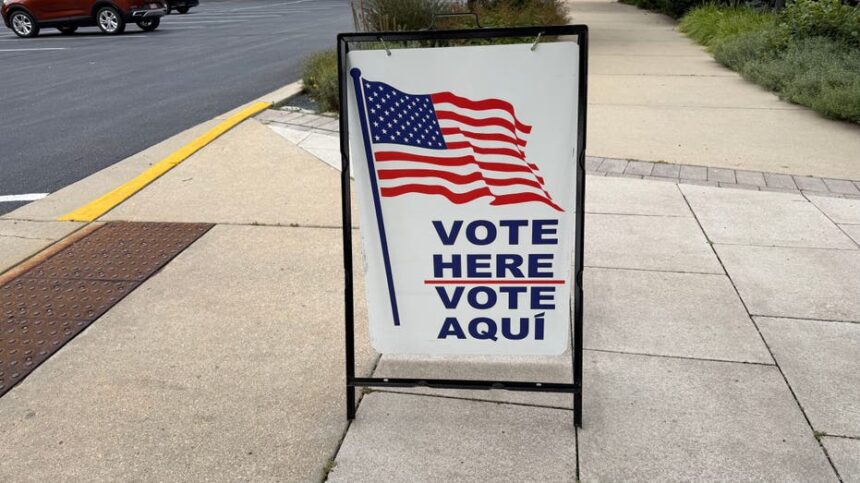
Voters in Nevada, North Carolina and Ohio all voted to pass voter ID requirements, even as talks among federal lawmakers have stalled on the issue, showcasing that the issue remains a point of public interest.
In North Carolina, the state has required photo ID for in-person voting since 2018. But with the adoption of a constitutional amendment in a 59.6% to 40.3% vote, the Tar Heel State expanded the requirement to all forms of voting.
Similarly, in Ohio, voters passed Issue 3 in a 65.3% to 34.6% vote. Although Ohio already had pre-existing in-person voter-ID laws, Issue 3 codified the requirement in the states constitution, making it harder to overturn later.
Finally, in Nevada, Question 7 passed in a 62.1% to 37.8% vote, establishing a constitutional amendment to enact the states first voter-ID requirement. It compels voters to show ID when voting in person and, for mail and absentee ballots, asks voters to provide the last four digits of their driver’s license or Social Security number.
In Idaho, voters approved HJR6 in a 63.1% to 36.8% outcome, a measure that makes English the official language of the state, codifying it for use in public proceedings with a constitutional amendment.
English had already been made Idahos official language through statute since 2007.
State Rep. Dale Hawkins, one of the champions behind HJR6, called it reflective of efforts from the Trump administration to make English the official language of the United States through executive order.
“Our current administration signed an executive order doing this for the entire United States so we are just in line with whats going on,” Hawkins said in public remarks.
In an interview with local media, Hawkins also cited a concern that many newcomers to the U.S. had, in his view, overlooked the countrys linguistic identity.
“One of the things that unites us all as a culture, as a country, as a state, is language. And what used to be the desired effect, which was assimilation â learn the language, learn the culture, learn the history â those things have slipped away. And we dont see assimilation anymore. And I believe that if we have a common language, then our culture will survive,” Hawkins told the Idaho Capital Sun.