The American economy is dangerously reliant on Communist China. Many in government and business know this, but hardly anyone has done anything about it.
One important step toward addressing this vulnerability is greater transparency. A petition recently filed with the Securities and Exchange Commission urges the agency to require publicly traded companies to disclose to shareholders the material risks created by deep supply chain dependence on China. Investors deserve a clear accounting of just how exposed corporate America has become.
This is no hypothetical exercise or war game. U.S. corporations have outsourced vital consumer production to a geopolitical rival that is openly committed to displacing America as the worlds leading power. Chinas appetite for Taiwan may very well become a near-term flashpoint.
SEN TODD YOUNG: THE HIDDEN DANGER CHINAS SHIPS COULD BRING TO OUR SHORES
Corporate reliance on China has resulted in a supply chain so brittle that an abrupt break in relations â whether from war, embargo or economic coercion â could cripple our defense, healthcare, technology and consumer economy overnight.
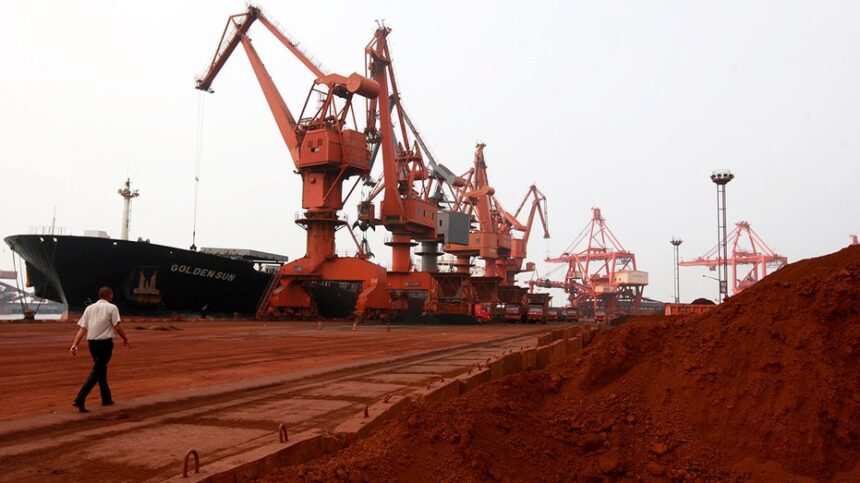
Communist China already controls decisive shares of vital materials and components. It mines roughly 70% of global rare earth elements and processes more than 90% of them. The U.S. relies on China for many critical minerals essential to F-35 jets, submarines, missiles, semiconductors, electric vehicles and medical devices. Export controls imposed by Beijing in recent years are not abstract warnings; they are dress rehearsals for leverage.
The pharmaceutical sector is equally exposed. China supplies 60% to 70% or more of key active pharmaceutical ingredients and precursor materials for antibiotics and other essential drugs. Much of the rest flows through India, which itself depends heavily on Chinese precursors. In a crisis, American hospitals, pharmacies and military field hospitals would face immediate shortages.
STEVE MOORE: POLITICIANS ARE BLAMING THE WRONG VILLAIN FOR AMERICAS RISING FOOD PRICES
This would not be merely an economic inconvenience â it would be a national health emergency.
U.S. companies chased low prices and handed Beijing practical know-how, machinery, processes and market share. The result, as The New York Times has noted, is a rival that now dominates production across rare-earth magnets, solar wafers, steel, pharmaceuticals and electric vehicles. Profit was never Beijings sole objective; strategic dominance was.
Recent history proves the point. China embargoed rare earth exports to Japan in 2010 over a territorial dispute, forcing concessions without firing a shot. It has restricted gallium, germanium and other materials in response to U.S. actions. Beijing is mapping foreign supply chains through licensing requirements precisely to identify pressure points for future coercion.</