The high-stakes fight between the left-wing and the center-left establishment for the future of the y took center stage Tuesday in battleground Michigan.
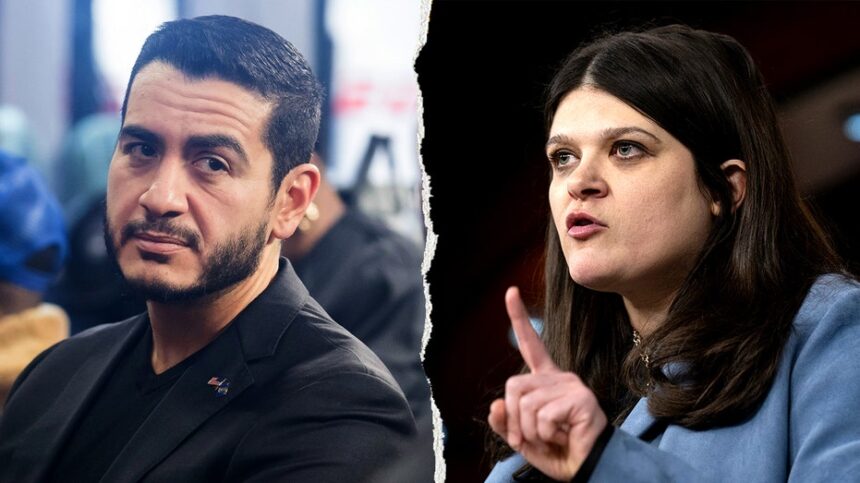
That’s where moderate Rep. Haley Stevens, who is backed by Senate Minority Leader Sen. Chuck Schumer, D-N.Y., and the party establishment, faced off in a fiery Senate nomination debate against former Wayne County Health Department Director Abdul El-Sayed, a far-left candidate endorsed by progressive champions Sen. Bernie Sanders I-Vt., and Rep. Alexandria Ocasio-Cortez, D-N.Y.
The sharpest exchanges centered on campaign money, outside spending and U.S. policy toward Israel, with El-Sayed repeatedly accusing Stevens of benefiting from millions of dollars in outside spending from pro-Israel and corporate-aligned groups.
“If you want your politics dictated by AIPAC or Chuck Schumer, then I’m not your guy,” El-Sayed said, arguing the Democratic Party would not change if it continued to elect leaders who take money from corporations. Stevens countered by accusing El-Sayed of benefiting from Republican efforts to boost him in the primary. “What my opponent needs to answer is, why is the GOP spending thousands of dollars to prop up his campaign, saying that he will make Mike Rogers the next U.S. senator?” Stevens said.
The showdown came four weeks before Michigan’s primary, with the winner taking on former Republican Rep. Mike Rogers, who is on a glide path to the GOP nomination, in the crucial midterm battle to succeed retiring Democratic Sen. Gary Peters.
The rare open Senate seat is a top Republican target and is a must-hold for the Democrats as they aim to win back the Senate majority from the GOP, which currently controls the chamber with a slim 53-47 margin.
The anti-establishment El-Sayed, who has been sharply critical of Israel, blamed AIPAC’s influence in American politics and accused politicians, like Stevens, of being “bought off by AIPAC” on Tuesday night. “So long as our politicians continue to be bought off by AIPAC do not be surprised when we fight wars that are in their best interest,” El-Sayed said.
Stevens, meanwhile, sought to flip El-Sayeds attacks over outside spending back onto him, pressing the progressive candidate to release his tax returns and accusing him of being less than transparent about who was funding his own campaign and career.Â
“Well, look, transparency is also important, and this is why I have released my tax returns. My opponent, Abdul, he said that transparency is key, but yet he hasn’t released his tax returns,” Stevens said. “Abdul, you talk about getting money out of politics and putting money in people’s pockets. But who is putting money in yours? What are you hiding?”
Stevens, who agreed with El-Sayed on an immediate end to U.S. involvement in Iran, also drew a contrast between herself and her opponent by emphasizing her support for a two-state solution.
“The difference between my opponent and myself on this issue is that I believe in a two-state solution,” Stevens said. “I can say that Israel has a right to peacefully exist alongside the people of Palestine and in Gaza.”
Immigration enforcement also became a flashpoint during the debate, with El-Sayed saying ICE needed to be abolished and accusing Stevens of shifting her tone to be more aggressive towards the agency Tuesday night than she has in the past.Â
Stevens responded by accusing El-Sayed of using “Republican tactics,” saying a House vote El-Sayed referenced, claiming Stevens “voted to thank ICE and increase their budget,” was a “cynical” move by the GOP to include condemnation for an antisemitic terrorist attack in Boulder, Colorado alongside funding for the federal immigration agency.