Sports have played a crucial role throughout my life. Growing up, I ran cross-country and was coached by my dad in basketball, until I found my true love: volleyball. I loved being a setter to the point that I dreamed about making plays. It taught me the things a sport often does: willpower, loyalty, discipline and how to come back swinging when you get knocked down.
But what I remember most is simply how much I loved it. My obsession even dictated the college I chose, where a devastating injury broke my heart and ended my career. Theres one thing I feel obligated to tell you, though: I was never going to be a collegiate star.
I went to a small school, and I still stand today at my maximum height of 5 feet flat. What I lacked in stature, I assure you, I did not lack in heart. I was a scrappy competitor, and I took losses hard. (Some would say I still do.) I embraced every morning and late night, the bruises and broken bones â not because I was destined to be Division I, but simply because I loved it.
I gained friendships, grit, and drive Im confident I wouldnt have gained elsewhere. And I say this, admittedly, not as a promising up-and-comer, but just a girl who loved playing. I step into a different court these days, but I still carry the grit that womens athletics gave me when I walk into a courtroom.
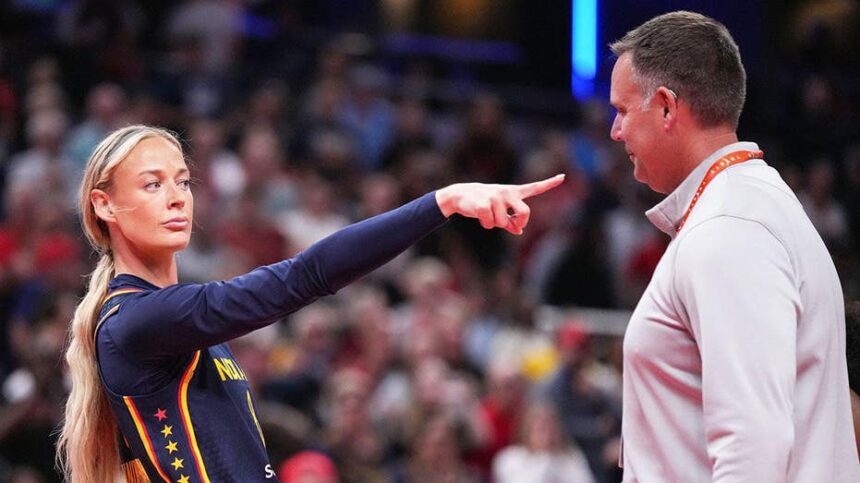
Enter .
In a now-famous ESPN interview, the Indiana Fever star, who calls herself politically “very much in the middle,” said she wants to protect young girls “who shouldnt have to go against biological men.” With that love, she added, comes truth.
After the media clutched their pearls over her saying biological sex is real, she doubled down, called it “common sense,” and posted on Instagram saying, “I said what I said.” No apology tour. No caveats. Just the truth, said twice for the people in the back. Her bold stand has sparked an important nationwide conversation in the days since and a whole gamut of supporters and detractors.
This is the courage aspiring female athletes need, especially in a league that partners with , which says that one of its values is “moving beyond the binary of girl.” Tell that to the girl who sacrificed everything to reach the podium.
Womens sports had a banner year. In two cases Alliance Defending Freedom litigated alongside the courageous leadership of Idaho Attorney General Raúl Labrador and West Virginia Attorney General JB McCuskey, the U.S. Supreme Court unanimously held that sex matters and that states can protect womens sports under Title IX. Thats a win for every girl in those 27 states.
But what does this mean for Kallie Keeler in Washington, who had to report a sexual assault after competing against a male wrestler during a match? For Selina Soule, Chelsea Mitchell, Alanna Smith, and Ashley Nicoletti, still waiting for Connecticut to stand up for the girls who are losing to boys today? For girls in California forced to compete against biologically male athletes like AB Hernandez?
It means were coming for the 23 remaining stat