Irans military is not designed to win a conventional war against the United States or Israel. It is designed to survive one, absorb damage and continue fighting over time, experts say.
That strategy is reflected both in how the force is built and how it is performing now, after weeks of sustained U.S. and Israeli strikes.
The scale of the campaign has been significant. More than 9,000 targets have been struck since the launch of , according to a March 23, 2026, fact sheet from U.S. Central Command, alongside more than 9,000 combat flights, hitting missile sites, air defenses, Islamic Revolutionary Guard Corps command centers and weapons production facilities.
U.S. officials say the objective is clear.Â
“We are targeting and eliminating Irans ballistic missile systems ⦠destroying the Iranian Navy ⦠and ensuring Iran cannot rapidly rebuild,” Joint Chiefs of Staff Chairman Gen. Dan Caine said during a March .
But analysts caution that the picture is more complex.
“Its a mixed bag,” Nicholas Carl, a fellow at the conservative American Enterprise Institute think tank and assistant director of the Critical Threats Project, told Fox News Digital. “On one hand, (Irans military) is badly degraded across the board, but the regime still retains a significant amount of capability.”Â
At the heart of Irans military system is a deliberate dual structure: the conventional army, known as the Artesh, and the Islamic Revolutionary Guard Corps, a parallel force created after the 1979 revolution to safeguard the regime.
According to Carl, Supreme Leader has shaped the armed forces throughout decades around one central objective: preserving the Islamic Republic and exporting its revolutionary ideology.
“You need to separate between the IRGC and the regular army,” intelligence expert Danny Citrinowicz told Fox News Digital. “The IRGC gets all of the budgets â better salaries, better equipment, better everything.”
Carl describes the Islamic Revolutionary Guard Corps as a “deeply ideological praetorian guard,” while the Artesh remains a more conventional force tasked with defending Irans borders.
But the distinction is not absolute.Â
“The IRGC is probably the more dangerous of the two, but we cannot discount the threat that the regular military poses as well,” Carl said.
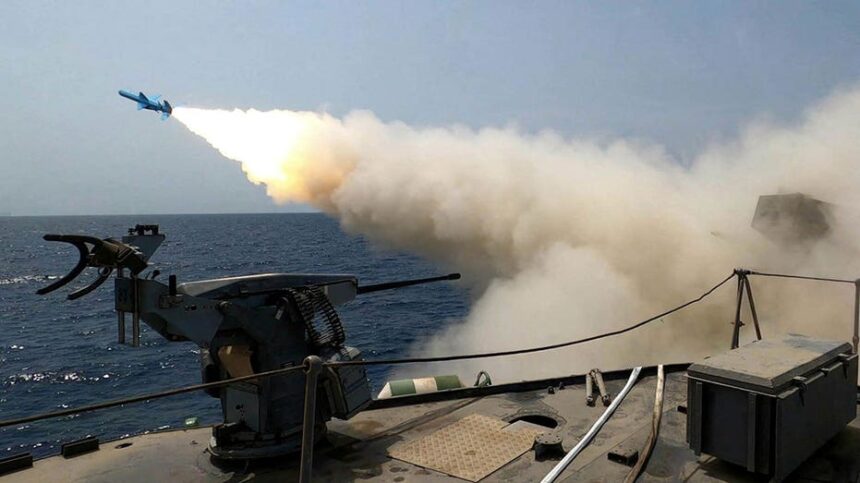
Irans missile program remains the backbone of its military power, even after .
The Islamic Revolutionary Guard Corps Aerospace Force has spent years building what Carl describes as the largest missile inventory in the Middle East.
U.S. officials say those capabilities have been significantly reduced with recent strikes.Â
“Irans ballistic missile shots fired are down 86% from the first day of fighting,” Caine said in a Pentagon briefing earlier in March, adding that drone launches have dropped by roughly 73%.
Secretary of War said in the same briefing that the campaign has sharply limited Irans ability to sustain attacks.Â
“The enemy can no longer shoot the volume of missiles they once did, not even close,” he said.Â
But even U.S. officials acknowledge the threat persists.Â
“Iran will still be able to shoot some missiles ⦠and launch one-way attack drones,” Hegseth said.
Carl said the decline in fire has plateaued.
“Iranian missile and drone fire has since the war began⦠but that number has been consistent for weeks,” he said. “That means they still retain enough capability to sustain strikes across the region.”
Citrinowicz offered a similar assessment.Â
“They suffered blows, but still hold the ability and still have the capacity to launch missiles for weeks to come,” he said.
U.S. estimates cited by Carl suggest roughly a third of Irans missile capabilities remain active.
“The regime still does have a significant capability to threaten targets across the region ⦠especially as it demonstrates the ability to shoot beyond 2,000 kilomete