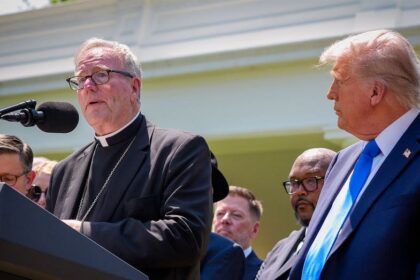
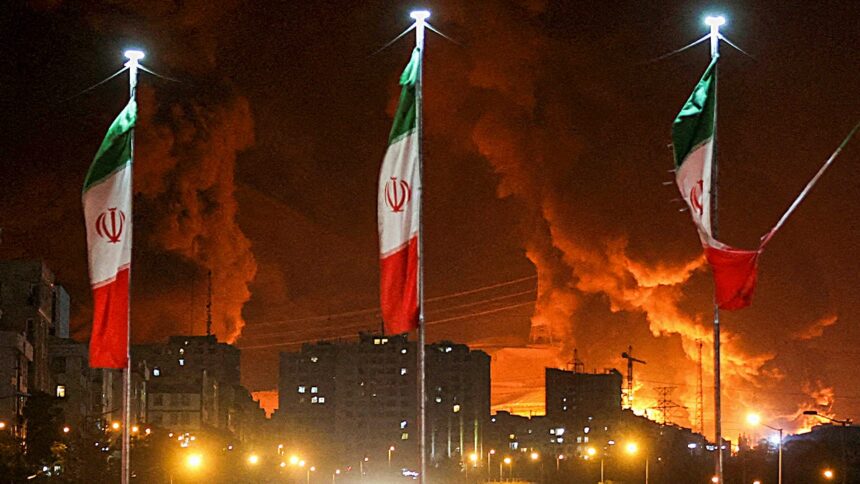
President has proven again and again to have mastered strategic and tactical surprise in conflict, and to depend upon the military professionals advising him. Now, however, he faces a decision on when to end the battle with the Islamic Republic of Iran or whatever regime follows its collapse.Â
In making that decision, the events of 35 years ago should figure in his calculation.Â
The American-led international coalition that assembled to drive Saddam Husseins Iraqi troops from Kuwait began that war with a massive aerial and naval bombardment of Saddams forces in Kuwait and some targets in Iraq on January 17, 1991. The first phase of the lasted five weeks. The second phase, a ground invasion of Kuwait, began on February 24, 1991, and famously (or infamously) concluded after 100 hours.
Serious military professionals have long debated the decision by then President George H.W. Bush, Secretary of Defense Dick Cheney and Chairman of the Joint Chiefs of Staff Colin Powell to end military operations when they did. A huge tactical success had been achieved and the strategic benefit of such an overwhelming display of force, and almost certainly some Americans are alive today who would not have survived an extended campaign to depose Saddam Hussein 35 years ago.
But..
The “Marsh Arabs” of Iraq, the Shi’a Muslim population that inhabited the marshlands around the confluence of the Tigris and Euphrates rivers in the southern part of the country still controlled by Saddam after the 100-hours campaign, attempted to wrest their freedom from Saddams remaining forces.  A 1992 Human Rights Watch report concluded: “In their attempt to retake cities, and after consolidating control, loyalist forces killed thousands of unarmed civilians by firing indiscriminately into residential areas; executing young people on the streets, in homes and in hospitals; rounding up suspects especially young men, during house-to-house searches, and arresting them without charge or shooting them en masse; and using helicopters to attack unarmed civilians as they fled the cities”
Add to that massacre another decade of atrocities by Saddam against his people that did not end until the , this time with Dick Cheney as the vice president and Colin Powell as secretary of state, ordered the military to invade Iraq and topple the dictator. In the dozen years between the two wars came the expense and danger of the two “no-fly zones” which the United Nations authorized and the U.S. enforced.
A friendly fire incident â U.S. F-15s mistakenly shot down two American Black Hawk helicopters with the loss of 26 military and civilian lives.Â
The extended deployment of American forces in the Kingdom of Saudi Arabia is also believed to have led to the terrorist attack on Khobar Towers on June 25, 1996, a housing complex in Dhahran, Saudi Arabia. 19 Airmen were killed and more than 400 U.S. and international military members and civilians were injured in the attack, which has been attributed to either or both Al-Qaeda and the Islamic Republic of Iran. The towers were home to troops and civilians supporting Operation Southern Watch, the no-fly zone operation in Southern Iraq.
Counter-factuals are not useful for debate. â make the most difficult decisions with limited information, some of which we still dont know â but the actual history that followed the 100 hours of war can inform the decisions ahead of President Trump.
Had the first Gulf War not been halted at the arbitrary elapse of 100 hours, but instead extended into a ground campaign in Iraq to depose Saddam Hussein in 1991, a completely different history of the would have followed, one perhaps free of the Iranian nuclear and missile programs which have precipitated this battle. But the coalition assembled by the first President Bush might have frayed and fallen apart. The American casualties of that war would have exceeded the 300 killed and 450 wounded. Again, t