
America suddenly has a gambling problem.
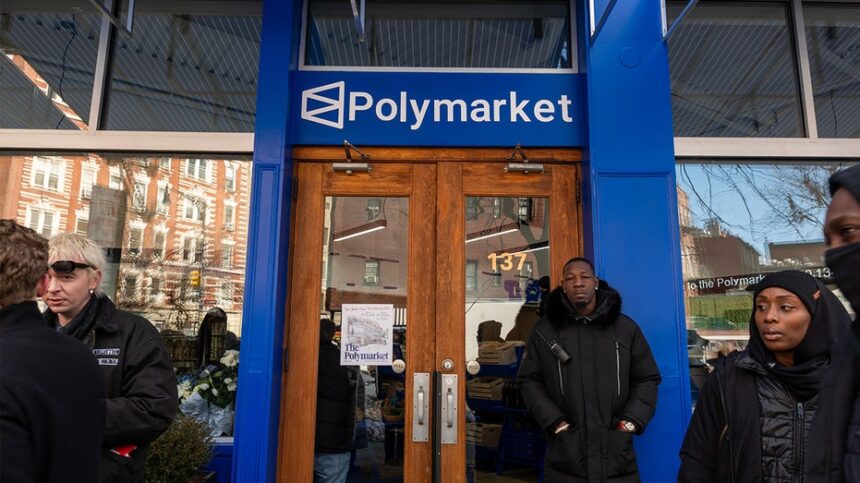
Sports betting is everywhere. Prediction markets like Kalshi and Polymarket let people wager on everything from football games to elections. Politicians and regulators are asking whether we’ve gone too far.
Fair question.
SEN DAVE MCCORMICK: PREDICTION MARKETS ARE BOOMING. WASHINGTON MUST CATCH UP
But there’s another gambling operation that’s been sitting on street corners for decades, quietly pickpocketing people. The government lottery. And it may offer some of the worst bets in America.
Americans bought more than $113 billion in lottery products in fiscal 2024, according to the North American Association of State and Provincial Lotteries. That’s more than $300 million every single day.
And business is booming. Census Bureau data show state lottery ticket sales nearly doubled from $52.8 billion in 2008 to $104.7 billion in 2024. Apparently inflation hasn’t killed America’s appetite for becoming an instant millionaire.
Let’s start with Powerball. Your odds of winning the jackpot are approximately: 1 in 292.2 million. Mega Millions? 1 in 290.5 million.
You could buy one Mega Millions ticket every week for 100 years and purchase only about 5,200 tickets. Those aren’t just bad odds.
They’re astronomical odds.
Yet lotteries have gotten increasingly creative at selling the dream. Mega Millions increased its ticket price from $2 to $5, promising bigger starting jackpots and built-in prize multipliers. Now Powerball is getting into football with a $5 NFL-themed game across nearly two dozen states.
Then there are scratch-offs. Walk into almost any convenience store and you’ll see an entire wall of them. $5. $10. $20. Even $50 scratch-off tickets.
We’re not selling a little $1 fantasy anymore. We’re selling some expensive dreams.
BRYCE HARPER VIDEO TO FANDUEL USER WITH GAMBLING ADDICTION UNDER REVIEW BY PENNSYLVANIA OFFICIALS
Here’s where the lottery bothers me most. A wealthy person spending $20 on lottery tickets generally doesn’t matter financially. But someone living paycheck to paycheck or making $50,000 a year spending $20 every week is blowing more than $1,000 a year.
For a lower-income household, that’s real money. That’s an emerge