The Iran conflict appears to be winding down. If the fragile ceasefire holds, President may stand before the American people in coming days and declare victory â shipping lanes reopened, deterrence restored, the ayatollahs humbled. On its face, that would be a genuine achievement.
The Iran campaign wasnt wrong. Confronting a nuclear-threshold regime that funded terrorism across three continents and threatened international shipping lanes was a legitimate strategic necessity. Trump acted where others hesitated.
But every consequential action carries second- and third-order effects â and those now unfolding extend well beyond what any victory headline can contain.
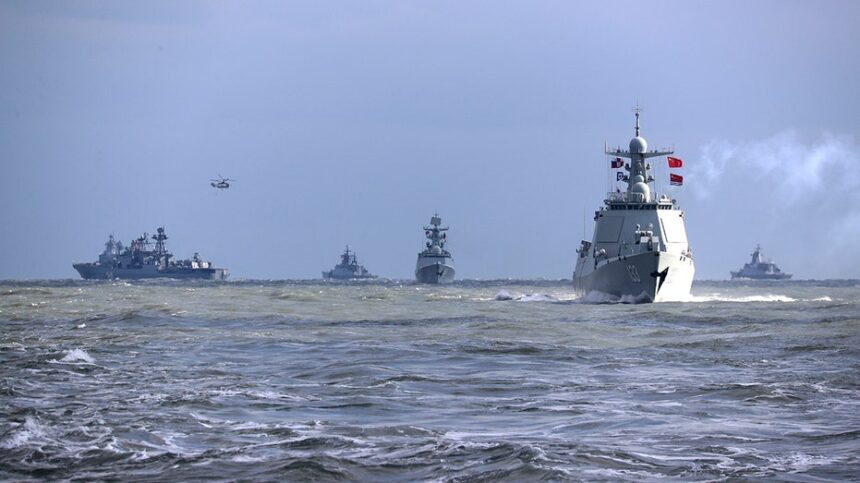
While Washington has been grinding down Irans military infrastructure, something far more consequential has been hardening in the background: a China-Russia-Iran strategic alignment accelerating the fracture of the post-Cold War world order â and that fracture now runs directly through the transatlantic alliance itself.
Xis signal cannot be dismissed
That is not diplomatic boilerplate. That is a geopolitical declaration.
Russian Foreign Minister Sergey Lavrov sharpened the message at that same Beijing meeting, â a direct, public rebuke of Trumps core demand for zero enrichment, and proof that Moscow is not merely watching this conflict but actively shielding Tehrans nuclear position.
Xi and Putin spent the Iran war watching from the sidelines â but not standing still. According to a Ukrainian intelligence assessment reviewed by Reuters, Russia provided Iran with satellite imagery and cyber support â unconfirmed, but consistent with Moscows pattern of proxy warfare.
Russia also publicly called on Washington to abandon “the language of ultimatums” on Tehran, proposed taking custody of Irans enriched uranium stockpile, and reaped a windfall as Brent crude surged toward $120 a barrel â a price surge that directly bankrolled Putins war of choice in Ukraine at the precise moment American forces were tied down in the Gulf.
Chinas support stopped short of confirmed combat involvement, but its strategic weight was substantial. Beijing purchased over 80% of at discounted prices, keeping Tehran financially viable through the bombardment. Chinese-linked tankers remained active in Iranian oil transit even amid blockade conditions.
Trump acknowledged the concern directly: with Xi Jinping after hearing reports that Beijing was supplying shoulder-fired and anti-aircraft missiles to Tehran. Xis response, in Trumps own words, said “essentially, hes not doing that” â and Trump threatened a 50% additional tariff if proven otherwise.
In January 2026, Iran, China, and Russia formalized strategic pact â not a mutual defense treaty, but a framework for nuclear, economic and military alignment. The Center for Strategic and International Studies has tracked this emerging “CRINK” alignment â China, Russia, Iran, and North Korea â and the data shows it hardening, not softening, under American military pressure.
This is the strategic trap Washington has walked into. Pressure on Iran did not isolate Tehran â it drove the axis tighter.
on Washingtons watch
The Iran war has done more damage to the Western alliance than any Russian influence operation in decades.
Former NATO Secretary General Jens Stoltenberg reminded the world from the official NATO lectern that NATO “is a defensive Alliance ⦠ not threatening anyone” â an alliance built in 1949 to defend Western Europe against Soviet aggression, not to launch discretionary wars of choice in the Middle East.
When Trump demanded warships from NATO allies France, Germany, Italy, and Britain â and separately from non-NATO partners Australia and Japan â of Hormuz, France, Germany, Italy, Britain, Australia, and Japan all refused.
Trump called their refusal a stain on “never disappear” and announced he is strongly considering withdraw