Even as Iran expands attacks across the Persian Gulf, several of the countries directly targeted are still refusing to join the fight against Iran, opting instead for restraint and diplomacy. Gulf governments say their priority is defending their territory while preventing a wider conflict that could destabilize the region and global energy markets.
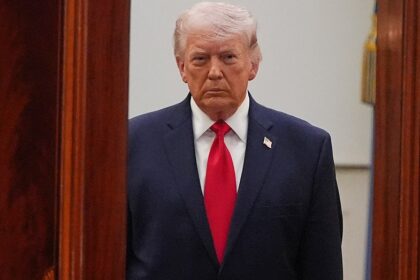
When asked by Fox News White House senior correspondent Peter Doocy about Irans strikes on Gulf states Monday, said experts had not anticipated Tehran would target neighboring countries.
“Nobody. Nobody. The greatest experts â nobody thought they were going to hit,” Trump said when Doocy asked about Iranian attacks targeting Qatar, Saudi Arabia, the United Arab Emirates, Bahrain and Kuwait.
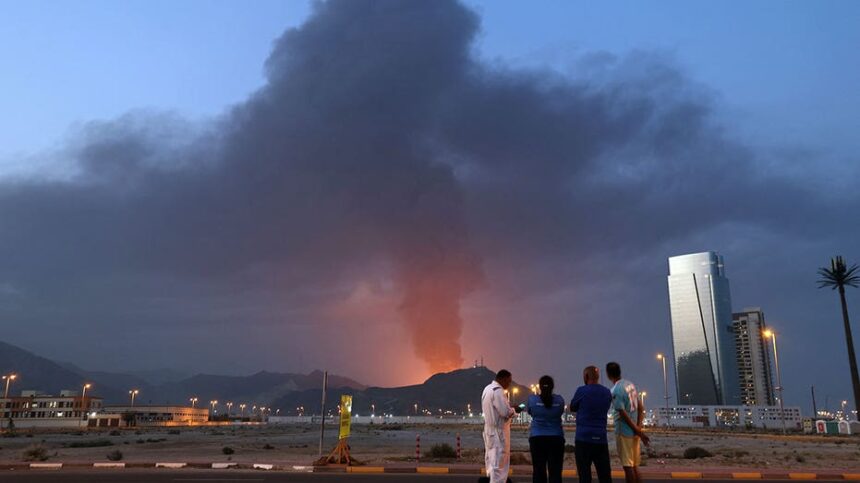
after U.S.-Israeli strikes on Iranian oil facilities earlier this month, expanding retaliation to Gulf energy infrastructure and shipping routes in the Strait of Hormuz, according to the Armed Conflict Location & Event Data Project.
Armed Conflict Location & Event Data Project (ACLED) recorded at least 25 Iranian attacks against shipping in the Gulf and the Strait of Hormuz since Feb. 28, as well as strikes targeting energy infrastructure across several Gulf states.
“Tehran targeted Gulf energy infrastructure and shipping in the Strait of Hormuz seeking to raise the costs of the war for the U.S. and its regional partners,” said Luca Nevola, ACLEDs senior analyst for Yemen and the Gulf.
Jacob Olidort, chief research officer at the America First Policy Institute, told Fox News Digital that, “, our Gulf partners have responded with an unprecedented unified front against threats posed by the Iranian regime,” he said, adding that their actions have focused on stopping attacks rather than expanding the war. “This reflects not just a desire to stabilize the region but also a recognition that the U.S. militarys success is what makes that possible.”
Salman Al-Ansari, a Saudi geopolitical researcher, told Fox News Digital that on maintaining global market stability. “Riyadh is exercising maximum restraint at the moment, but the real question is how long that restraint can last,” Al-Ansari said.
Al-Ansari pointed to a long-standing Saudi strategic philosophy. “Over a hundred years ago, the founder of Saudi Arabia, King Abdulaziz Al Saud, said: The living do not fight the dead. Perhaps Riyadh is following this doctrine, at least until further developments unfold,” he said.
Qatar has taken a similar approach. ” always seek to de-escalate conflicts,” a Qatari official told Fox News Digital. “Qatar is not a party to this war, and we strongly believe that the violence must end through negotiations. At the same time. Qatar continues to defend its country and sovereignty following the Iranian attacks.”
Another factor shaping Gulf restraint is a regional policy of refusing to allow their territory to be used for attacks on Iran. Some U.S. military experts say the Gulfs hesitation is also tied to long-standing concerns about Washingtons reliability in the region.
Vice Adm. Robert S. Harward, a former deputy commander of U.S. Central Command, told Fox News Digital that inconsistent U.S. policies have eroded trust among Gulf partners. “Our policies in the Middle East have been more cyclical than a revolving door,” Harward said. “We have failed to earn the trust and confidence of our Gulf partners over the last decade and a half. And that lack of trust and confidence has only exacerbated the threat from Iran to the region.”
The now retired vice admiral said Gulf governments are weighing the risks of escalation carefully. “As these countries consider whether to go on the offensive, they are worried about what happens when we leave,” he said. “Admittedly, these countries are challenged to defend themselves against a country of 90 million without us.”
Regional analysts say Gulf leaders are concerned that if even one country joins , the confli