The fog of war usually refers to maddening confusion about what is happening on the battlefield.
But right now we have the fog of : Are they real, are they going anywhere, and which side is telling the truth?
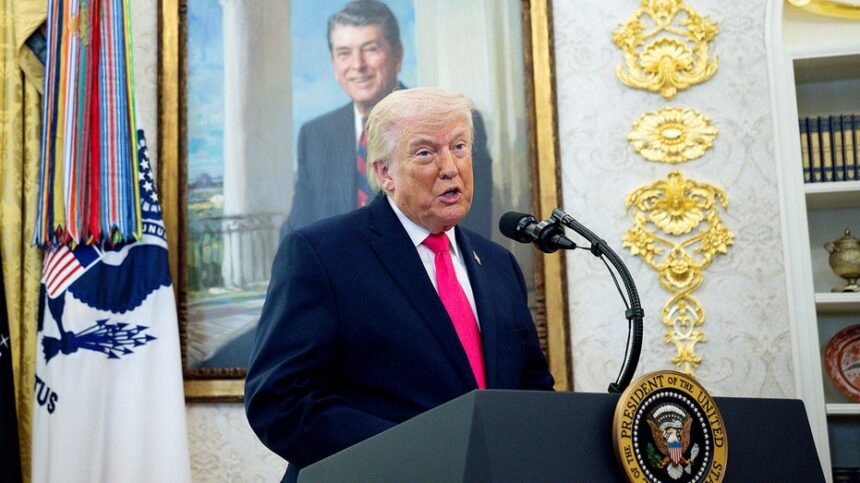
Its clear that President Trump, insisting he can end the war with Iran whenever he wants, is looking for an exit ramp to declare victory and get out.
Its just as clear that the theocratic dictatorshipâat least the leaders who survived the attacks that killed the ayatollah and many othersâare digging in their heels. They will claim victory just for surviving the military onslaught that has decimated their navy and air force.
When Trump said there were back-channel talksâgranting a to obliterate its energy facilitiesâthe Iranians flatly denied it. Some prominent pundits doubted Trump. But then Tehran said yeah, well, there have been some .
Now we have starkly different accounts of whats going down.
Trump says the talks have been “very good.” The other day, in fact, he depicted the mullahs as making a major concession.
The Iranians have given the U.S. “a very big present, worth a tremendous amount of money,” Trump said. He was cagey about it, but revealed under questioning by CBSs Ed OKeefe that it involved the flow of oil and the Strait of Hormuz.
At the same time, Iranian military spokesman taunted the administration in a video: “Has the level of your internal conflict reached the point where you are negotiating with yourselves?”
“Do not call your defeat an agreement,” he said.
And for good measure: “Someone like us will never come to terms with someone like you. Not now, not ever.”
Now some of this is undoubtedly done for domestic consumption. But the two sides sound like they couldnt be farther apart.
The president has delivered a flurry of mixed messages on the Strait of Hormuz, the narrow passageway where an Iranian blockade has choked off one-fifth of the worlds oil traffic. He has said that the situation will work itself out. He has said our European allies (who refused to join our effort to intervene) should resolve this since the U.S. doesnt rely on the strait. And he has also said that opening Hormuz is a top American priority.
Iran, which has , told the U.N. that the waterway is open to any country not backing the U.S. and Israeli attacks. But other nations, and their insurance companies, are reluctant to send billion-dollar tankers into such troubled waters.
The impasse is hurting here at home, where soaring oil costs have boosted gas prices and tanked the stock market, shrinking the value of all those 401Ks. When Trump announced the bombing pause Monday, the market snapped back for a day. If theres one thing Wall Street hates, its uncertainty.
Despite signaling that the war is practically over because “weve won,” Trump just dispatched at least 1,000 troops from the 82nd Airborne to the Middle East, along with the USS Tripoli, carrying 2,200 Marines.
Meanwhile, Secretary of Defense has been playing the bad cop, vowing if theres no deal “to destroy the enemy as viciously as possible.”
Whats equally unclear is who were talking to, with Pakistan playing the intermediary role. Trump has talked about regime change, though there seems no chance of that, and theres chatter about doing business with the speaker of Irans parliament, Mohammad Ghalibaf, a former Revolutionary Guard commander who at times has taken a diplomatic approach with the West.Â
But with so many leaders killed and Ayatollah Khameneis son in hiding, no one knows how much influence Ghalibaf, a failed presidential candidate, still has.
Just yesterday, Ghalibaf, invoking the , warned the administration against sacrificing American soldiers for “Netanyahus delusions,” according to al-Jazeera. That hardly sounds conciliatory.
Whats more, the Iranians are famously difficult to negotiate with, going back on promises and moving the goalposts. Ju